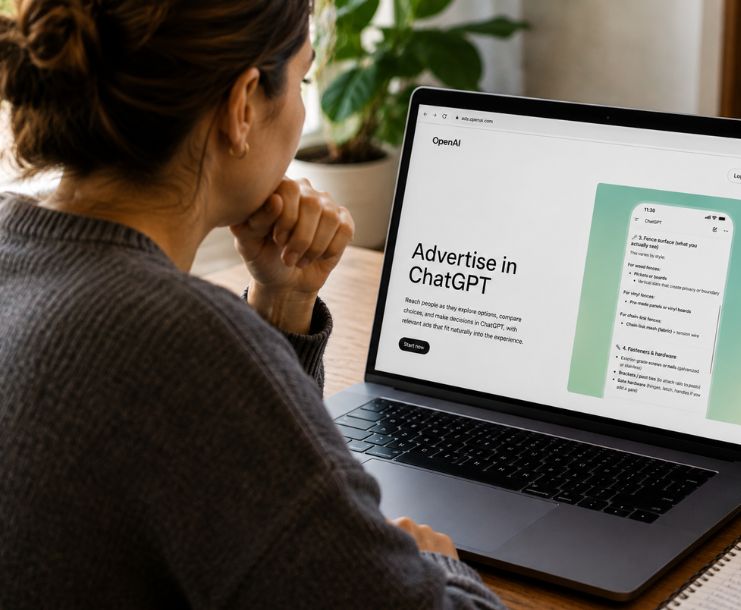
On Friday 19th June 2026, OpenAI officially started rolling out its self-serve ChatGPT Ads Manager Beta to advertisers here in the UK.
OpenAI is giving brands early access to get hands-on with the platform, map out account structures, and understand the workflow before the ecosystem gets crowded. There’s no upfront billing information required just to look inside, meaning brands can test the waters and get a feel for the platform with zero initial friction: https://ads.openai.com/
This has opened up an entirely new frontier for local businesses. Because users treat ChatGPT as a research assistant rather than just a search engine, the ad landscape looks very different from traditional platforms like Google or Meta.
If you are a local business and considering testing this brand-new ads platform before your competitors do, there are a number of opportunities and threats to bear in mind:
The Opportunities & Advantages
High-Intent “Decision Layer” Targeting
When people search for local services on Google, they often look for quick, transactional terms (e.g., “plumber near me”). On ChatGPT, queries are conversational and deep in the research phase (e.g., “I have a historic home with low water pressure, what are my options?”).
- The Advantage: OpenAI’s platform allows you to target these specific conversational contexts. An ad for a local plumbing or engineering service appearing at that exact moment puts you in front of a highly qualified lead who is already leaning toward a purchase decision.
Lower Early-Adopter Competition
Because the self-serve platform is relatively new, most local competitors are still putting 100% of their budget into Google Ads, Local Services Ads or Facebook.
- The Advantage: Early adopters face less bidding competition for localised conversational terms, which can result in high-quality, intent-driven traffic before the market becomes saturated and expensive.
Native, Non-Intrusive Integration
Unlike pop-ups or heavy banner ads, ChatGPT ads on the free and “Go” tiers are designed to sit natively below or adjacent to the AI’s text response, clearly labeled as sponsored.
- The Advantage: Because the ads mirror the helpful, problem-solving tone of the conversation, users who interact with them often exhibit lower cross-out (dismissal) rates and higher engagement compared to traditional display networks.
The Threats & Risks
High Cost-Per-Click (CPC) & Budget Volatility
Early data from marketers testing the self-serve platform shows that traffic on OpenAI can occasionally be up to 3 to 5 times more expensive per click than standard Google Search terms.
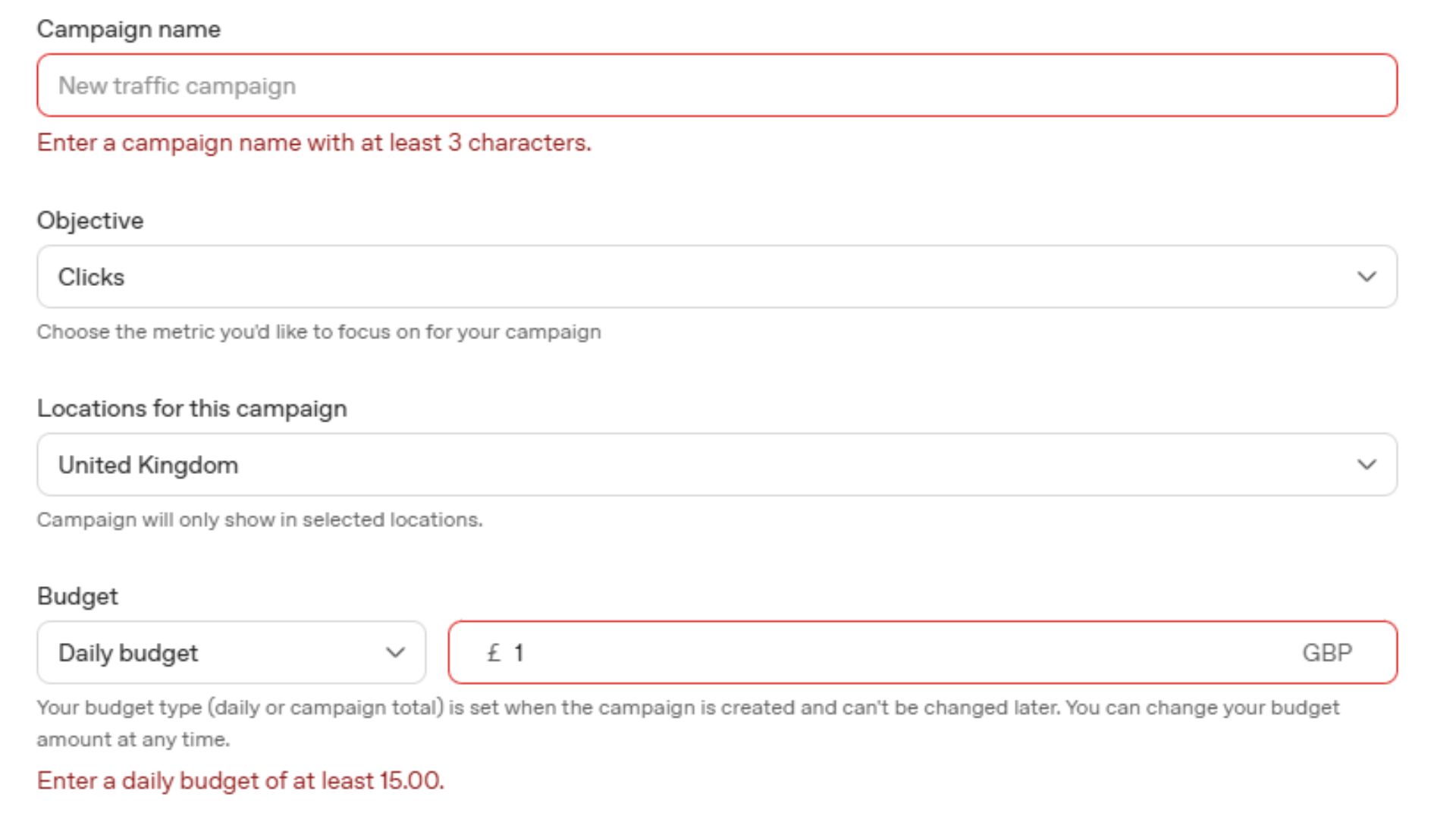
- The Problem: Because the inventory is tighter than Google’s massive network, bids can spike quickly. For a local business with tight margins, a few accidental or poorly targeted high-CPC clicks can wipe out a daily budget. Each campaign also has a minimum budget of £15 per day (though it may not spend the full £15 if there isn’t enough demand)
The Attribution “Black Box”
Tracking the return on investment (ROI) for a local business on ChatGPT is notoriously difficult.
- The Problem: A user might chat with the AI on their desktop, see your local service ad, close the tab, and call you from their phone two days later. Standard analytics platforms struggle to map this journey. Without using highly specific landing pages, tracking parameters (UTMs), or unique promo codes, local businesses run the risk of flying completely blind on whether their spend is actually driving foot traffic.
Total Loss of Brand Context Control
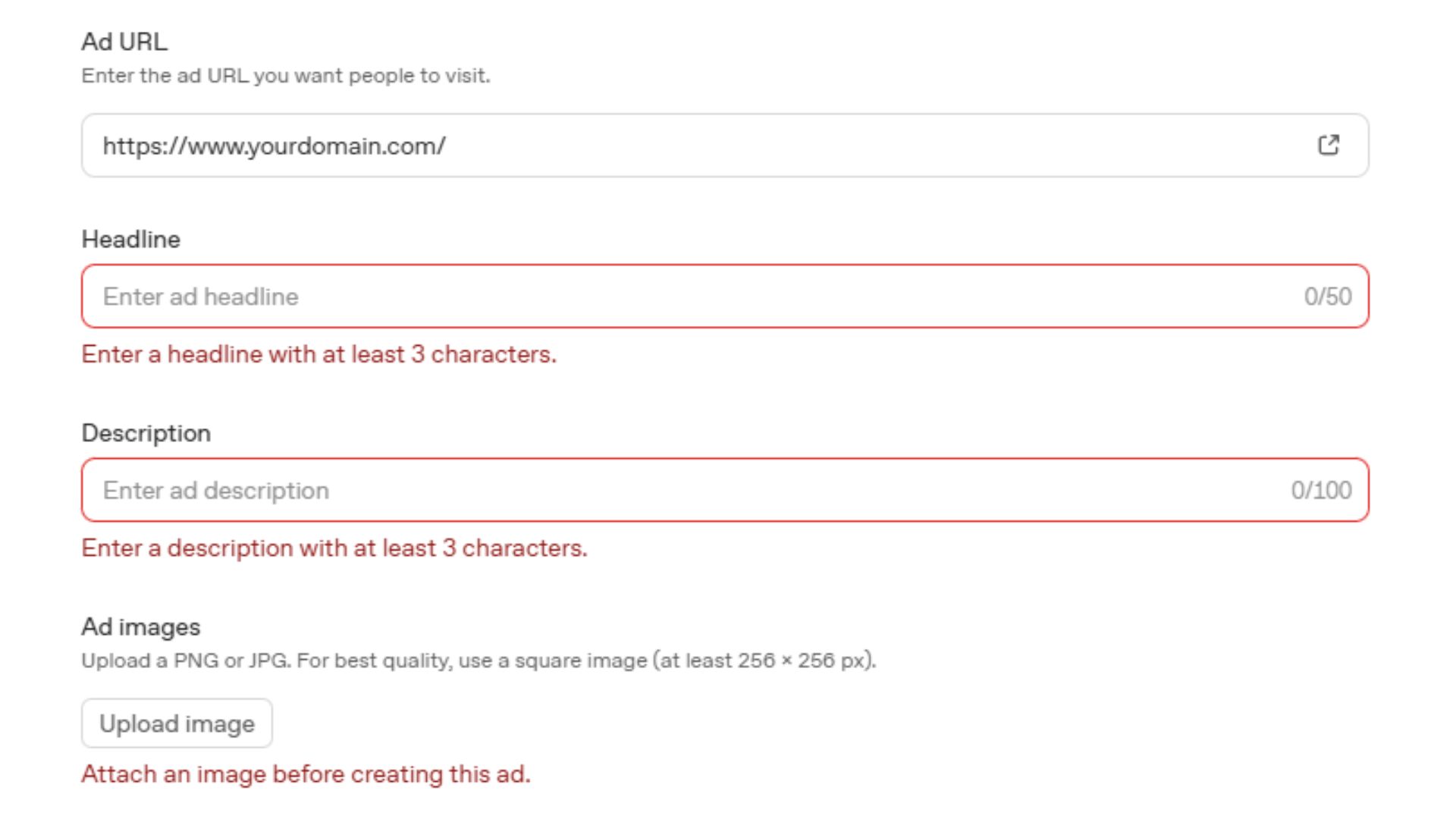
When you buy a Google Ad, you dictate the exact headline and description copy. While ChatGPT ads allow you to upload specific headlines, the AI matches them dynamically based on the conversation’s context.
- The Problem: You cannot entirely control the surrounding text the AI generates. If the chatbot gives a slightly off-base or legally sensitive answer regarding a local service (e.g., giving questionable home repair advice) and pairs your ad directly beneath it, your brand can suffer from guilty-by-association reputational damage.
Fragmented Local Scale
While hundreds of millions use ChatGPT, a vast majority of everyday local consumers still automatically default to Google Maps or Apple Maps when looking for immediate local businesses with a physical destination (restaurants, mechanics, dry cleaners). If your target demographic is heavily localised or older, the active user base searching for local recommendations via an AI chatbot might still be too small to justify a dedicated ad spend.
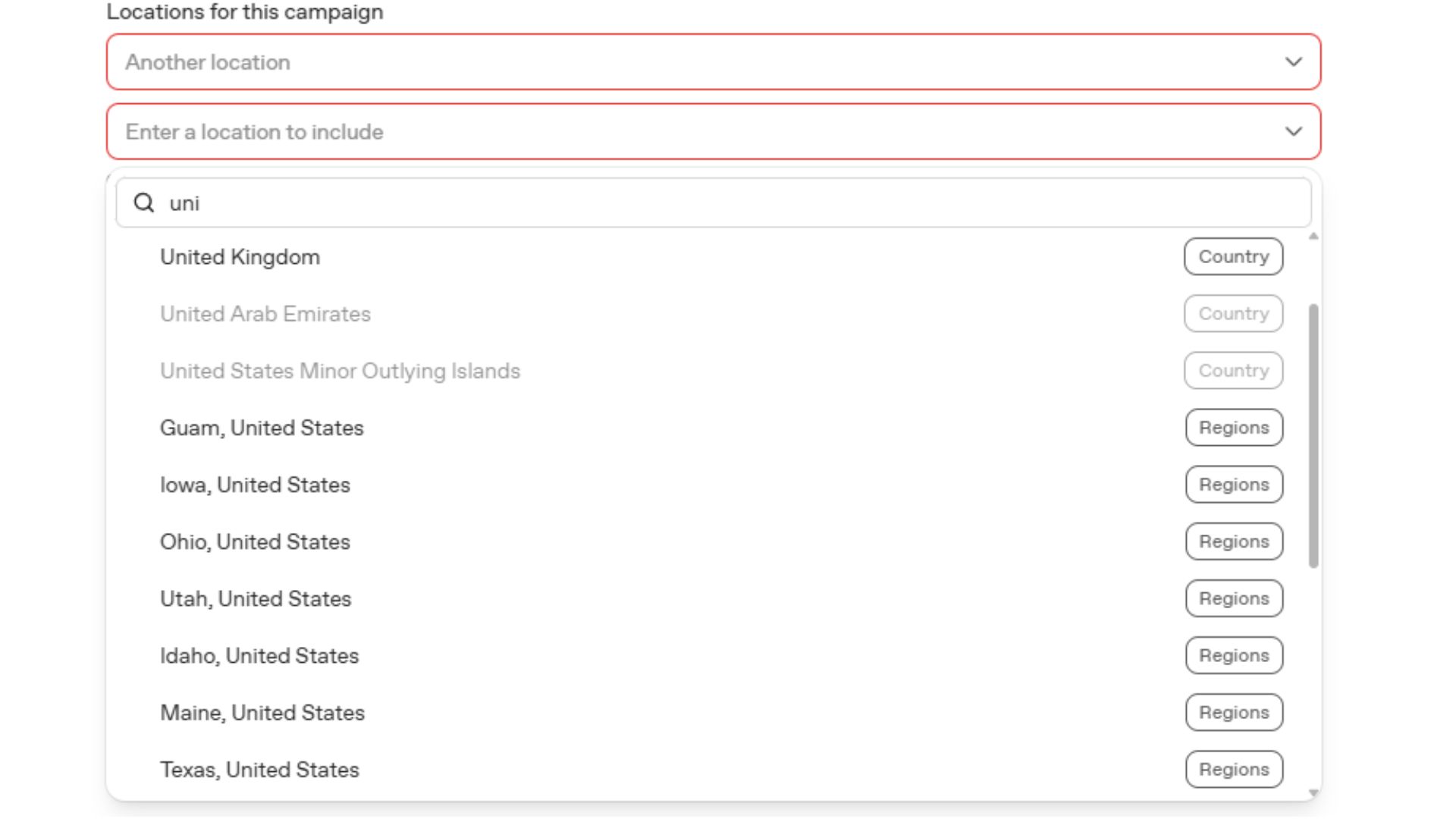
- The Problem: Upon launch, the geo targeting options are very minimal – aka UK only. For US advertisers this is slightly better as advertisers can define which State they want ads to show in (see screenshot) – but regional or English county setup is not an option in the interface yet. I’d hope this would improve over the next few months.
Best Practices for Local Rollout
If you decide to test the waters, treat ChatGPT ads as a supplement, not a total replacement for your local SEO or Google Ads/Local Services Ads marketing tactics.
- Bid on Intent over Keywords: Instead of targeting broad terms like “accounting firm,” target conversational Context Hints like “how to set up an LLC for a small contracting business in [City].”
- Hygiene First: ChatGPT pulls from across the web to understand your business. Ensure your Google Business Profile, directories, and website data (Name, Address, Phone Number) match perfectly so the AI accurately references your location.
- Cap Budgets Strictly: Set strict daily budget caps and maximum CPC limits inside the OpenAI Ads Manager to protect yourself from sudden bidding spikes.
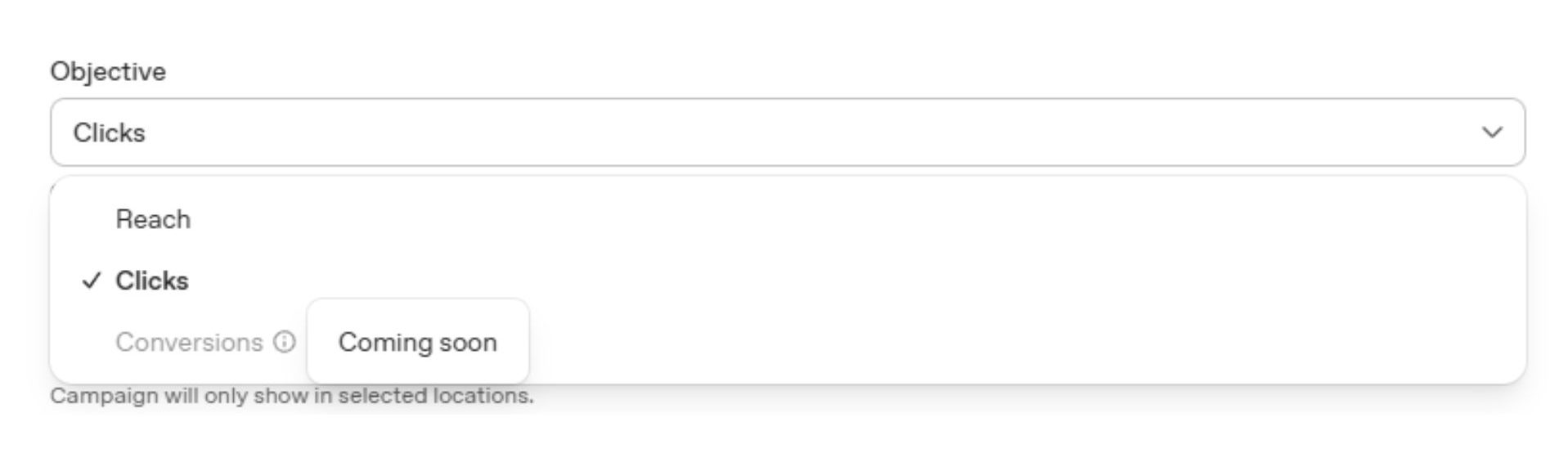
- Bid strategy: At the time of writing (June 2026) only Reach and Click objectives are live. Keep checking the interface to find out when Conversion-based bid strategies are live.
Traditional search engines rely on keywords – exact strings of text a user types into a search bar. OpenAI’s self-serve Ads Manager fundamentally flips this script. Instead of bidding on individual words, you target conversations using Context Hints.
Understanding this difference is critical for a local business to avoid wasting money on irrelevant, high-CPC (cost-per-click) traffic.
🔍 Context Hints vs. Traditional Keywords
The shift from keywords to context hints is a move from literal matching to semantic intent (understanding the meaning behind the conversation).
| Feature | Traditional Keywords (Google Ads) | Context Hints (OpenAI Ads) |
| Matching Logic | Literal: The system matches strings of text (e.g., “roof repair”) to what the user typed. | Interpretive: The AI reads the entire ongoing conversation to evaluate the user’s situation and intent. |
| Control | High: You use broad, phrase, or exact match types, alongside negative keywords to block bad traffic. | Guidance-based: Hints are suggestions. The AI uses them as signals along with your landing page content to determine fit. |
| User State | Transactional: Usually looking for a quick link, location, or direct answer. | Research Mode: The user is deeply exploring a multi-step problem, comparing options, or asking for advice. |
Instead of guessing a specific search phrase, you use a plain-language sentence to describe the exact scenario, problem, or decision-stage your customer is in when they need you.
✍️ How to Write Context Hints for Local Businesses
The biggest mistake a local business can make is writing context hints that simply describe their business category (e.g., “We are a local dental clinic”). ChatGPT already knows what you are; instead, you need to describe the user’s situation.
Use these rules to craft context hints that convert:
- Write from the Customer’s Perspective
Focus on the problems, anxieties, or projects a user is actively discussing with ChatGPT.
- ❌ Bad Hint: Affordable local plumber (Too generic, treats it like a keyword).
- ✅ Good Hint: I have boiler model XXXXX: why is my water pressure low?
- Tailor to the “Research” Phase
People use AI to figure out how to do things or what something means before they hire a professional. Capture them in that exact moment.
- ❌ Bad Hint: Family law solicitor
- ✅ Good Hint: What is the legal process for child custody mediation or drafting a separation agreement in the UK
- Blend in Local Intent Signals
While OpenAI utilises geographic campaign targeting to ensure your ads serve only to users in your specified area, your context hints should describe a user trying to solve a physical, real-world local problem.
- ❌ Bad Hint: dishwasher repair company in Manchester
- ✅ Good Hint: A homeowner trying to troubleshoot why their dishwasher is leaking or glasses still gritty.
So, what do you think? Is testing ChatGPT ads in your marketing plan for 2026 and 2027?
If so, ChatGPT Ads are now open for UK advertisers: https://ads.openai.com/ or to discuss outsourcing ads setup and management, email hannah.zoramarketing@gmail.com